
Carmelo Bene
Birthday: 1937-09-03
Place of Birth: Campi Salentina, Lecce, Italia
Biography: The filmmaking career of Carmelo Bene (1937 - 2002) lasted from 1968 to 1973, six years out of a lengthy time spent in the theater that made Bene one of the most celebrated figures of the Italian avant-garde in the second half of the 20th century. Bene first made a name for himself with a controversial production of Camus’ Caligula in Rome in 1959. Subsequent productions retained this sense of notoriety, and Bene (like Pasolini) quickly acquired a police record. Bene, however, would come to bemoan the controversy his work created, because it attracted an audience looking for shocks and titillation, while he himself was more concerned with reinventing the vocabulary of the theater: sets, gestures, texts. Bene’s turn to cinema expanded that quest to reinvent. His films resist synopsis because, although they are often derived from narrative sources, Bene uses these sources against themselves and as a springboard for his critique of the stultifying traps of representation and interpretation. The films are wildly inventive and visually arresting on several levels: the performance styles of his actors, including eccentric movements, gestures and grimaces; the sets, costumes and makeup; the editing; and the use of the camera, with stable shots regularly punctuated by handheld camera work, extreme close ups and the occasional baroque use of zooms, dollies, cranes, elaborate pans and exaggerated camera angles. They resemble something like the work of Jack Smith crossed with the experimental Pasolini of Teorema and Pigsty. One constant feature of Bene’s work is its satire of heterosexuality. The two sexes keep trying to communicate with each other, but always fail to do so. Bene’s work constantly deflates masculinist pretenses at mastery: his male characters tend to be hapless and often hysterical, while his female characters are alternately predatory and remote, and unknowable in either case. But this satire is merely the most visible form of Bene’s revolt against convention and communication. Over and over again in the films, everyday actions become hopelessly complicated or endlessly interrupted. His characters often end up staring quizzically offscreen or even into mirrors, as if they were no more sure than we are of the meaning of what they see. Indeed, identity and by extension agency seem to get suspended, along with meaning. What is left is glorious spectacle and enigmas for the eyes and ears: endless music; babbling, stuttering text; excessive and exciting images. – David Pendleton
Movies
Bis
In 1966, Bene presented The Pink and the Black, his successful theatrical adaptation of Matthew Greg...
View Movie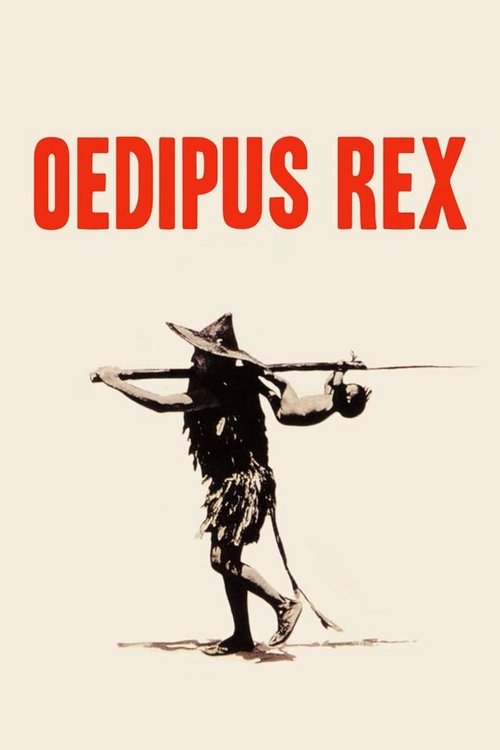
Oedipus Rex
In pre-war Italy, a young couple have a baby boy. The father, however, is jealous of his son - and t...
View Movie
Riccardo III
Riccardo III is a theatre play staged in 1977 and also edited for television and aired in 1981, whic...
View Movie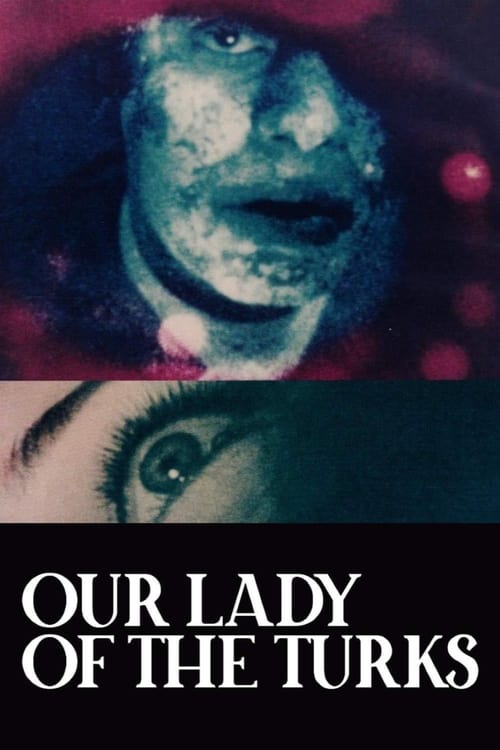
Our Lady of the Turks
To the protagonist, an intellectual so feverish that he seems pathologically unrecoverable, a confus...
View Movie
Carmelo Bene, il canto d'amore di Alfred J. Prufrock
Carmelo Bene read a text by T. S. Eliot...
View Movie
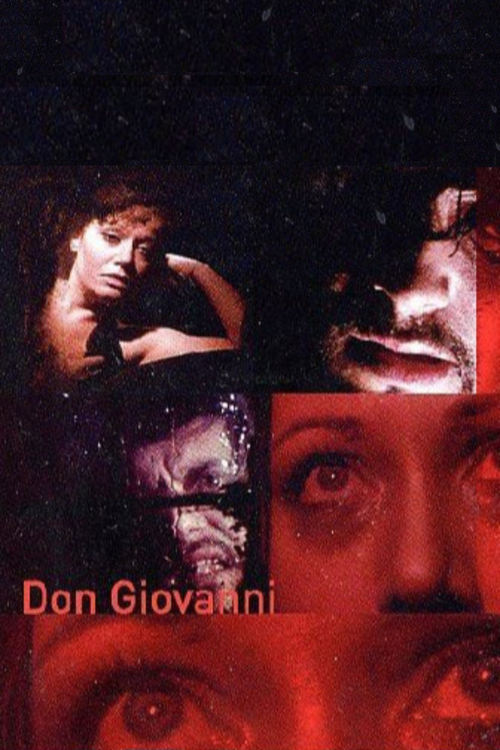
Don Giovanni
In this a baroque and claustrophobic take on Mozart’s opera of the same name, Don Giovanni tries to ...
View Movie
Necropolis
Frankenstein's monster gropes towards the awareness that his mind is a universe; Attila, naked on a ...
View Movie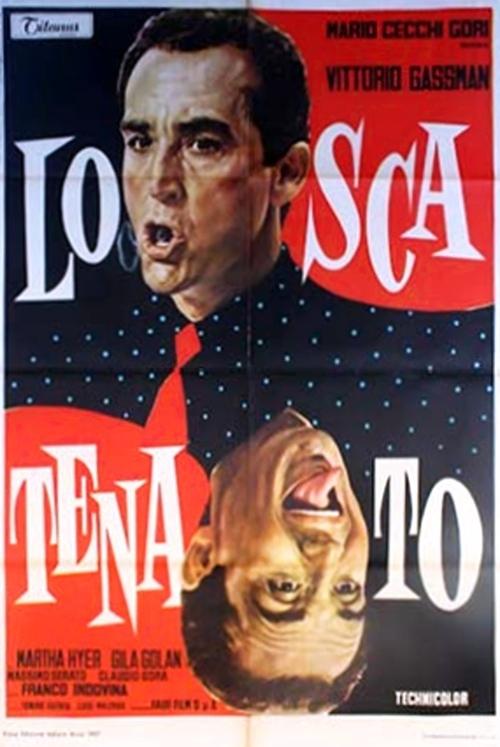
Catch As Catch Can
Bob is a successful actor, but his career gets doomed by a strange phenomenon: the animal kingdom is...
View Movie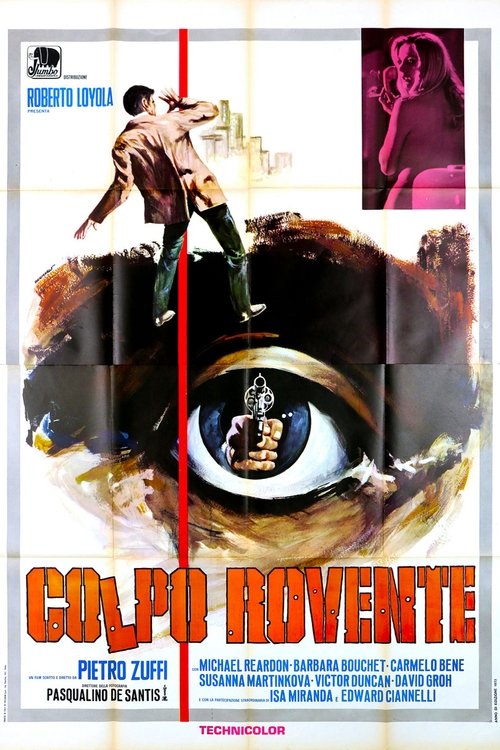
Red Hot Shot
Frank was removed from an investigation into Mac Brown, the owner of a pharmaceutical company, who w...
View Movie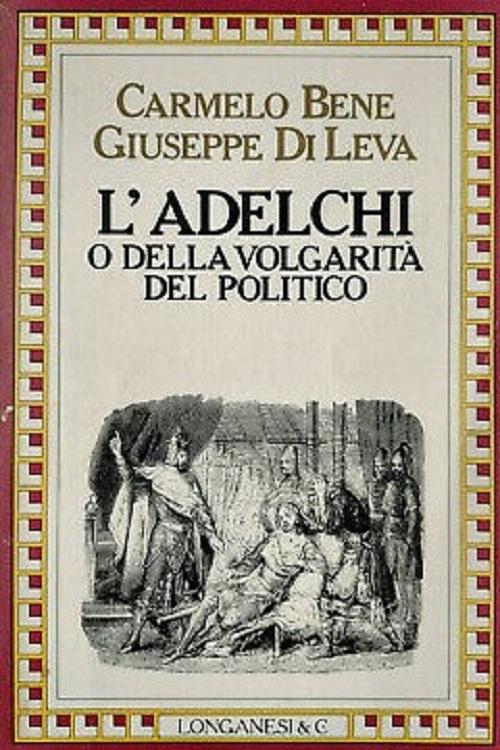
L'Adelchi di Alessandro Manzoni in forma di concerto
Recording by Rai Milan of Adelchi staged by Carmelo Bene at the Teatro Lirico in Milan in 1984, with...
View Movie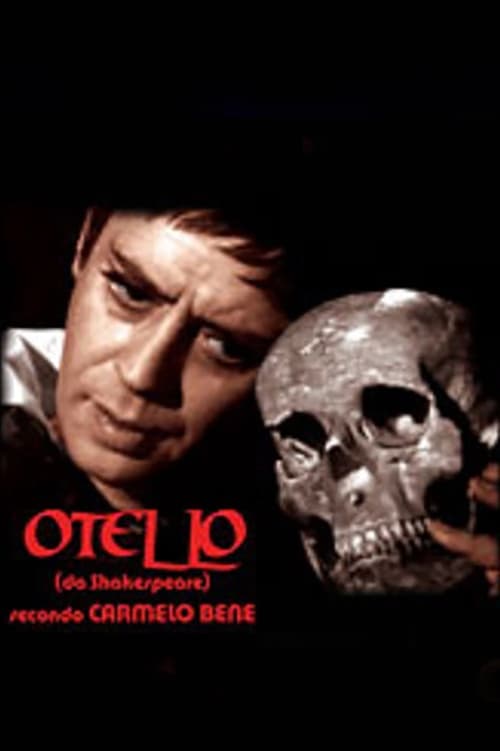
Otello o la deficienza della donna
Produced by RAI and filmed in the Turin studios in 1979 but edited years later, in 2001-2002, this i...
View Movie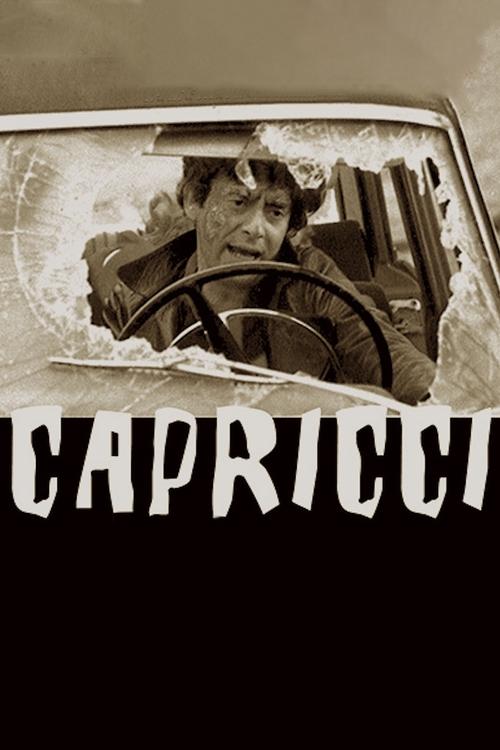
Capricci
After a fight in their apartment, the story of a writer and a painter are divided. The writer is ded...
View Movie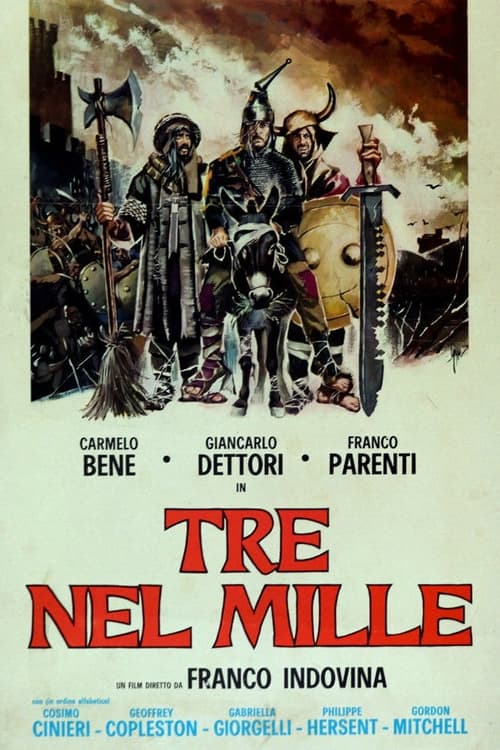
Tre nel mille
A few days after the arrival of the year 1000, bearer of great misfortune according to the Prophets,...
View Movie
Modi di vivere - Giorgio Colli. Una conoscenza per cambiare la vita
Realized in 1980 for Rai 2, it recalls the main phases in the life of Giorgio Colli....
View Movie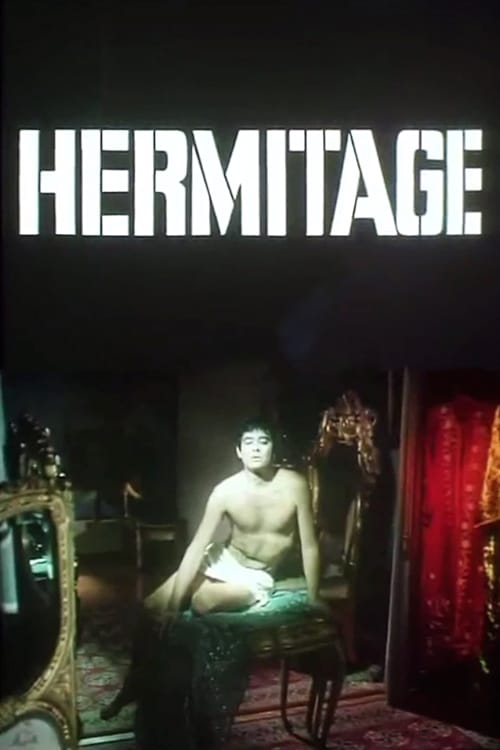
Hermitage
Hermitage, defined by Bene as "a rehearsal for lenses", beyond any literal rendition - its narrative...
View Movie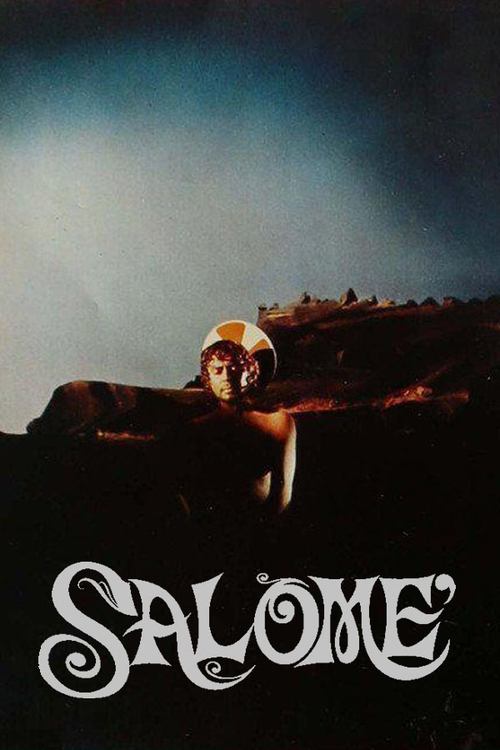
Salomé
Salome is the daughter of the second wife of King Herod. The King is infatuated with her and, after ...
View Movie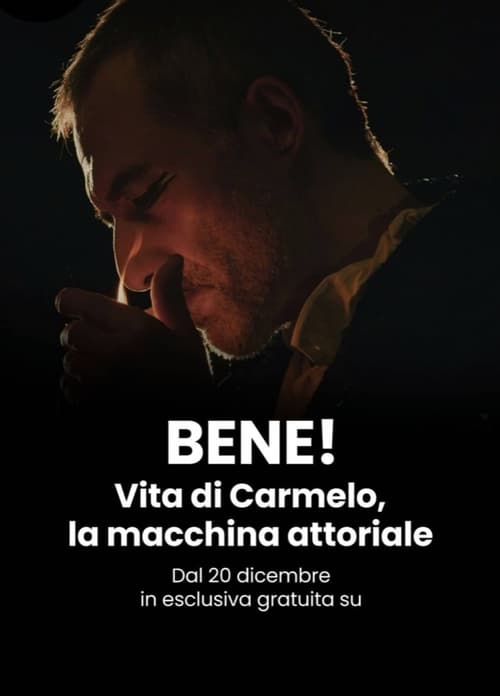

One Hamlet Less
The Prince of Denmark, Hamlet, is little interested in family affairs and the fate of the kingdom, a...
View Movie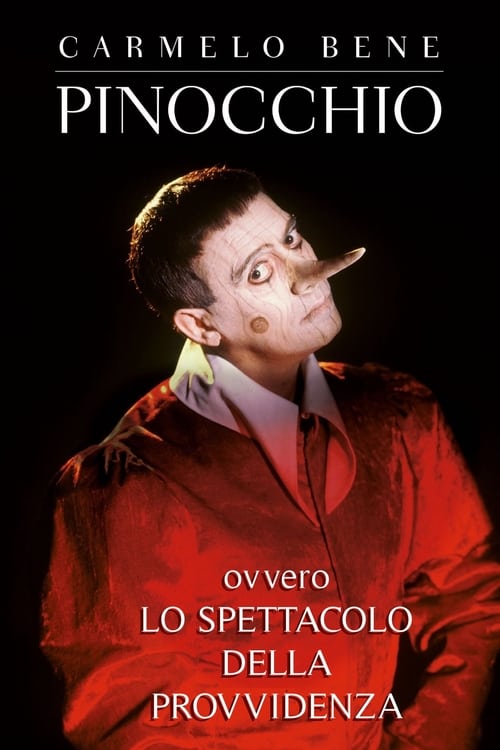
Amleto di Carmelo Bene (da Shakespeare a Laforgue)
An experimental video variation on Shakespeare's Hamlet....
View Movie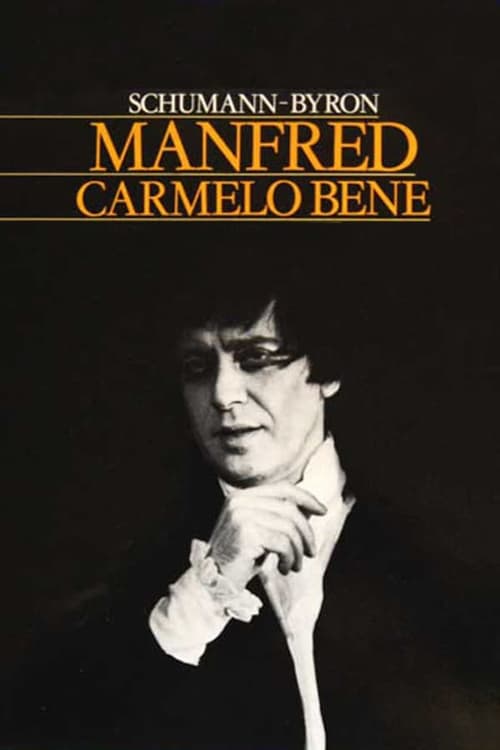
Manfred, versione per concerto in forma di oratorio
Drama by Lord George Byron, music by Robert Schumann. Filmed at Teatro Comunale di Bologna, 1979....
View Movie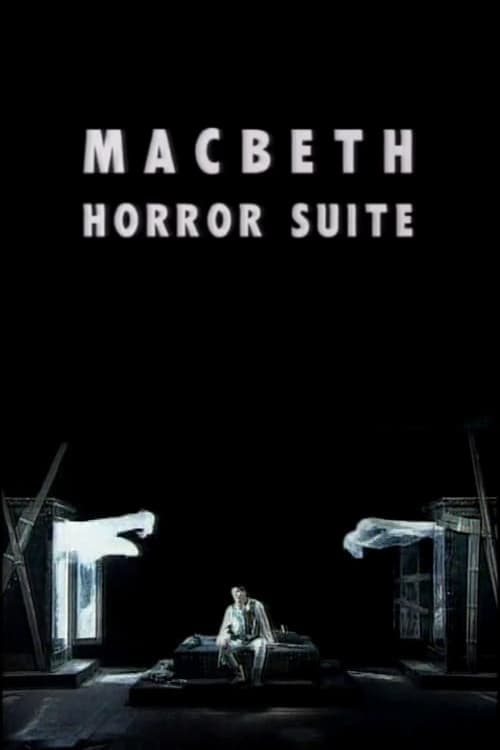
Macbeth Horror Suite
Macbeth, the Thane of Glamis, receives a prophecy from a trio of witches that one day he will become...
View Movie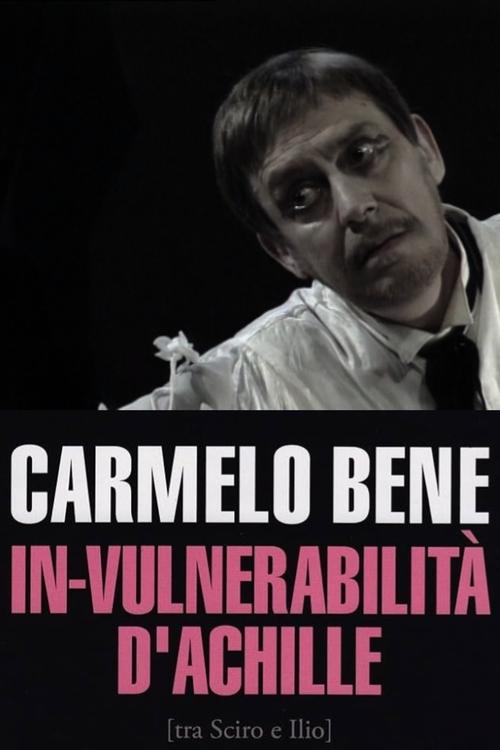
In-vulnerabilità d'Achille (tra Sciro e Ilio)
One of the last TV performances by Carmelo Bene, from Publio Papinio Stazio and Henrich Von Kleist, ...
View Movie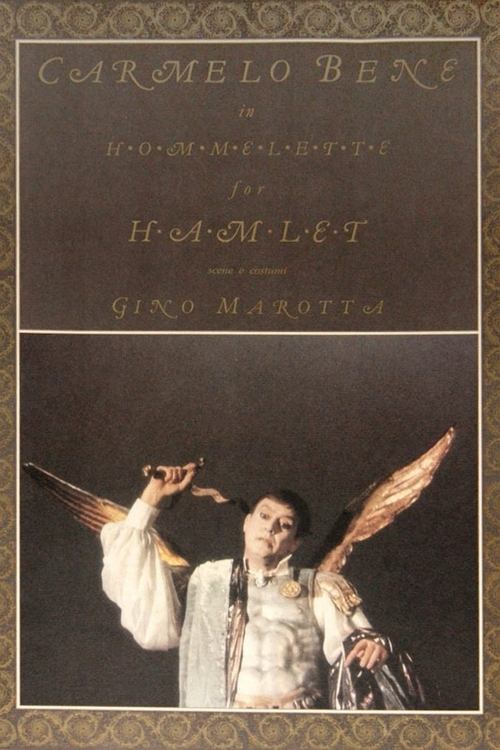
Hommelette for Hamlet, operetta inqualificabile (da J. Laforgue)
A TV movie variation on Shakespeare's Hamlet. The movie is a part of Carmelo Bene's multi-medial pro...
View Movie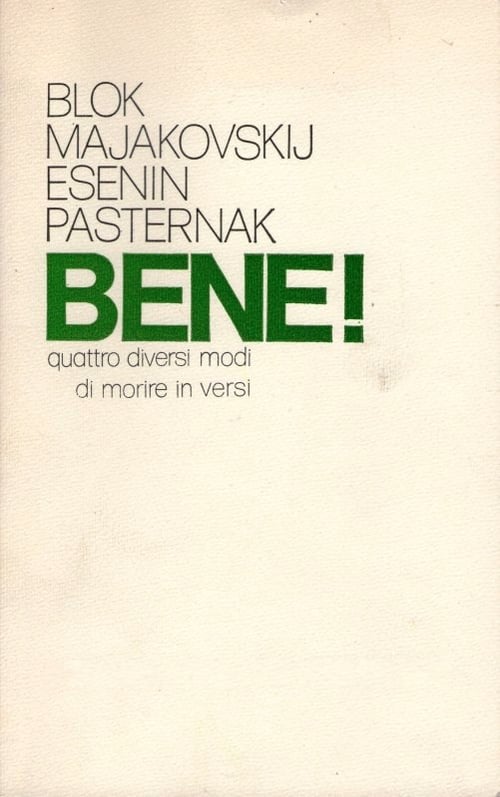
Bene! Quattro diversi modi di morire in versi: Majakovskij-Blok-Esènin-Pasternak
Performance shot in 1977, in which emblematic actor Carmelo Bene, in the charming reconstruction of ...
View Movie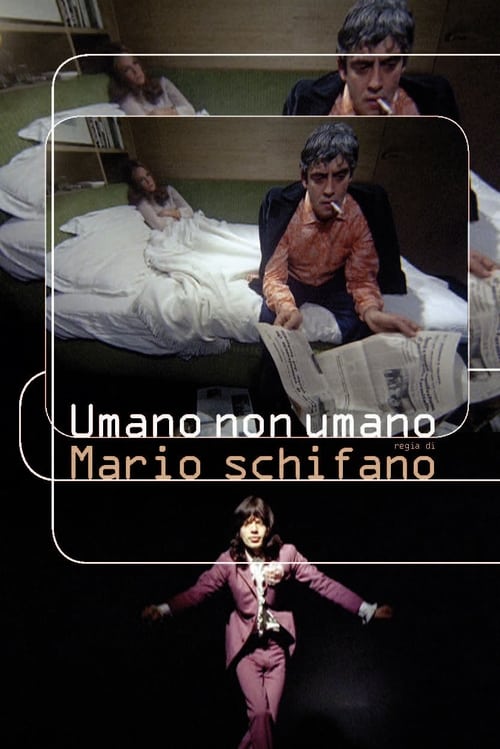
Umano non umano
Artists and poets meet in a dreamlike space between walks and performances....
View Movie
Ventriloquio
Adapted from the ninth chapter of the novel "Controcorrente" (1884) by Joris Karl Huysmans. Its narr...
View Movie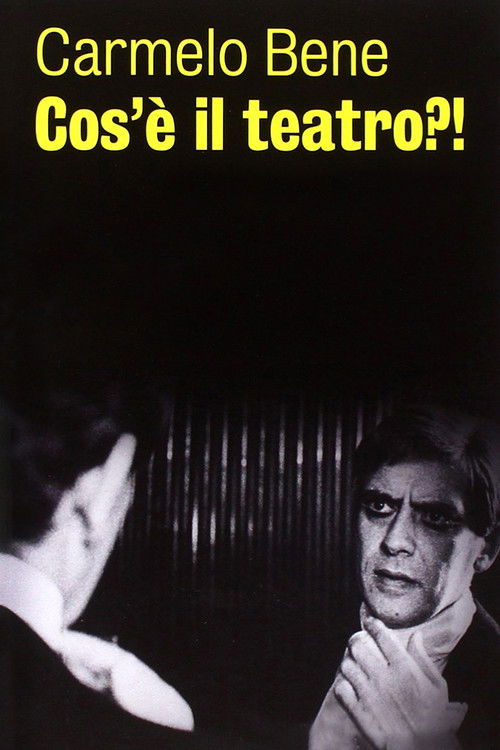
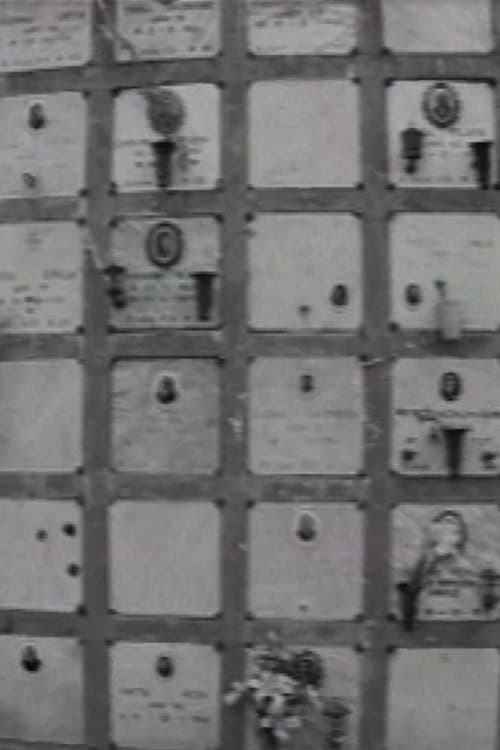
Ai Rotoli
A visit to the Rotoli cemetery in Palermo, while film director Carmelo Bene reads a fragment of Anto...
View Movie
Lorenzaccio, al di là di de Musset e Benedetto Varchi
Video registration of Carmelo Bene's play 'Lorenzaccio, al di là di de Musset e Benedetto Varchi', p...
View Movie
Voce dei Canti
On the occasion of the bicentenary of the birth, Carmelo Bene returns to the verses of the poet from...
View Movie
Canti Orfici
Actor, poet and playwright Carmelo Bene offers a reading of excerpts from the collection of literary...
View Movie
Un'ora prima di Amleto, più Pinocchio
Backstage short documentary on Carmelo Bene’s theatre works Amleto and Pinocchio....
View Movie
Claro
In the words of the director, a movie about 'the colonizers in the view of the colonized', the movie...
View Movie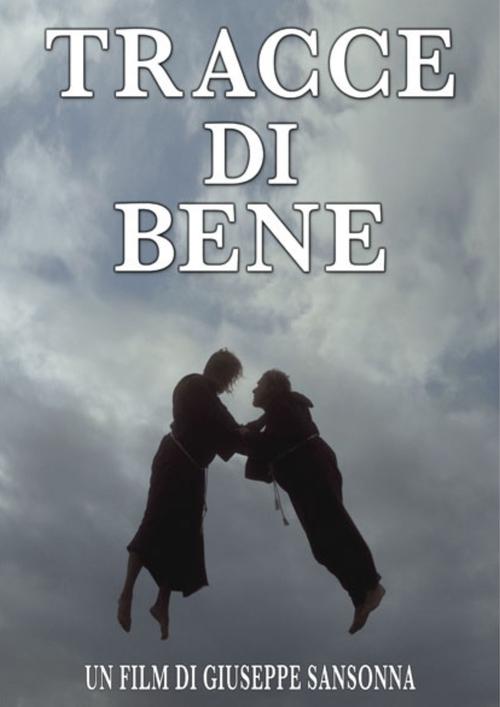
Le tecniche dell'assenza
Videotape produced by Ferruccio Marotti for Roma's University theatre students. A presentation of Ca...
View Movie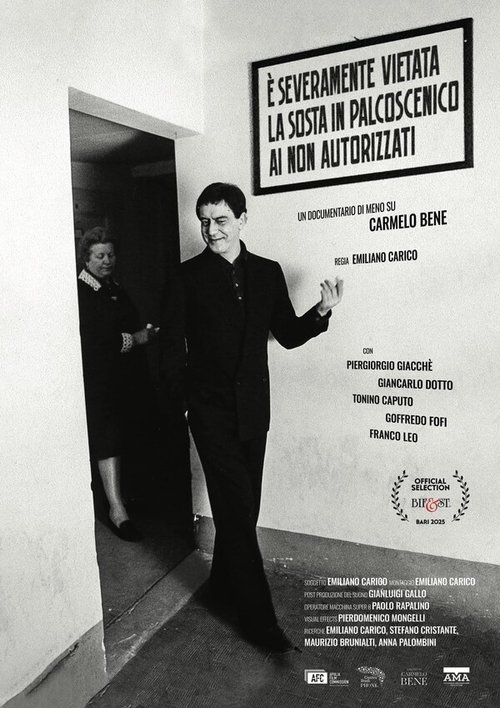
È severamente vietata la sosta in palcoscenico ai non autorizzati. Un documentario di meno su Carmelo Bene
...
View Movie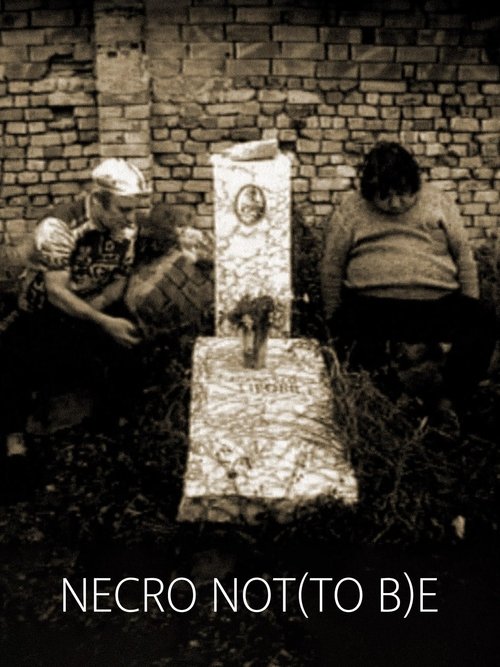
Necro not(to b)e
A montage dedicated to friends, actors and companions who have passed away over the years: from Fran...
View Movie
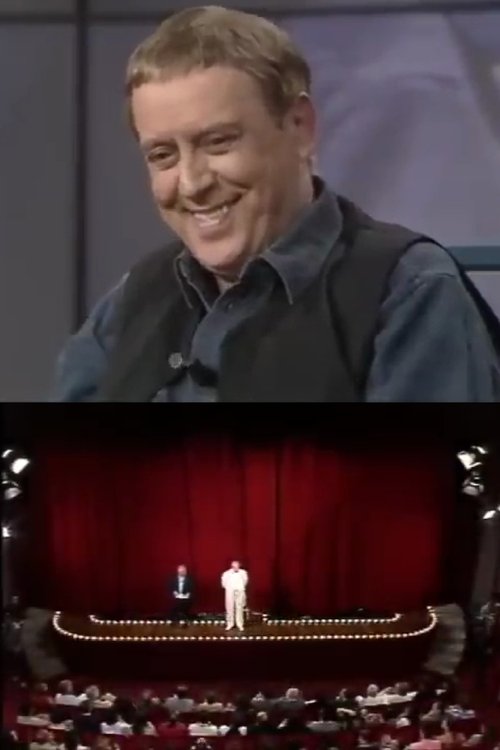
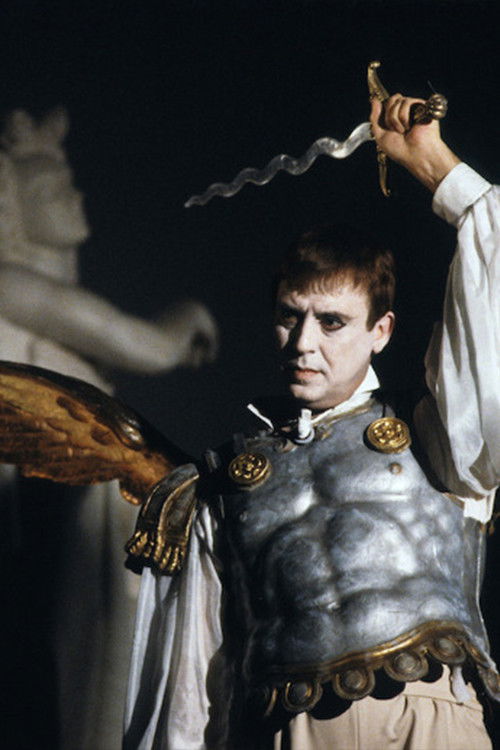
The Discarded Prince – A Satirical-Philosophical Dialogue with Carmelo Bene
Television medium-length film made in 1976 by Carlo Rafele, produced by Swiss Italian Television for...
View Movie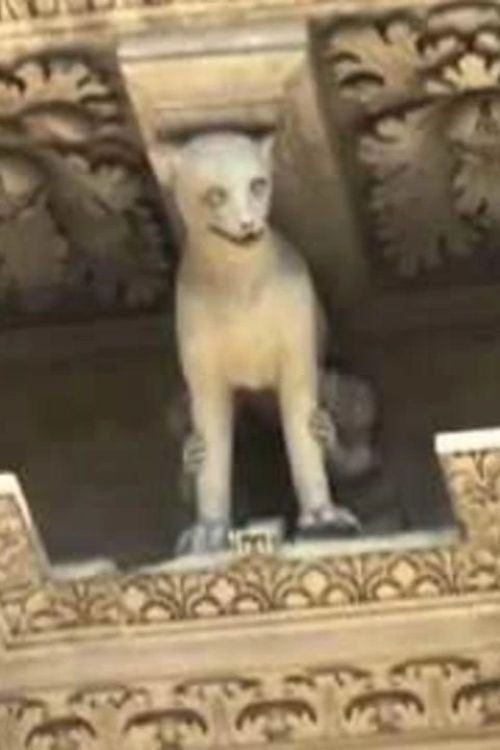
Il barocco leccese
An experimental documentary short about Saint Cross's basilica of Lecce, Apulia. In 1968, Carmelo Be...
View Movie